Choosing the right paper stock comes down to three things: weight, finish, and purpose. Paper stock is the specific type of paper your project is printed on, defined by how thick it is, whether it has a coating, and how it feels in the hand. The right choice makes a brochure feel premium, keeps a booklet easy to read, and ensures a business card does not bend the moment someone slips it into a wallet. The wrong choice can make even beautiful artwork feel cheap.
At Replica Printing Services, we have helped San Diego and Poway businesses match paper to project since 2001, and it is one of the most common questions our clients ask before placing an order. This commercial print paper stock guide walks through every factor that matters — weight, coating, brightness, opacity, and texture — so you can make a confident decision for flyers, booklets, postcards, business cards, or anything else you are printing.
You do not need to memorize the technical terms. You just need to understand how a few key choices change the look, feel, and cost of your finished piece. Here is how the pros think about it.
Paper Stock Comes Down to Weight, Finish, and Purpose
Every paper decision is really a balance of three factors: how heavy the paper is, how its surface is treated, and what the piece needs to do. Get those three right and the rest of the details fall into place.
- Weight determines how thick and substantial the paper feels — the difference between a flimsy flyer and a sturdy postcard.
- Finish (the coating and surface) controls how your colors, photos, and text read on the page.
- Purpose is the deciding filter — a mailer, a manual, and a business card all have different demands.
Once you know what the piece needs to accomplish, the weight and finish choices become much easier.
Paper Weight Determines How Substantial Your Print Feels
Paper weight is the single biggest factor in how premium your printed piece feels. In North America, weight is measured in pounds (lb), while most of the rest of the world uses grams per square meter (GSM) — a more consistent measurement. The confusing part is that “text” weight and “cover” weight use different scales, so a 100 lb text and a 100 lb cover are not the same thickness at all.
Text Weight vs. Cover Weight
Text-weight (also called book-weight) paper is lighter and flexible, used for the pages inside a booklet, flyers, letterhead, and brochures. Cover-weight (cardstock) is thicker and rigid, used for business cards, postcards, and the covers of bound documents. As a simple rule: if you can fold it easily and want it to lie flat, you likely want text weight; if it needs to stand up to handling, you want cover.
Here is a quick reference for common weights and where they are typically used:
| Paper Stock | Approx. GSM | Typical Uses |
|---|---|---|
| 20 lb bond | ~75 gsm | Standard copy paper, internal documents, drafts |
| 70–80 lb text | ~104–118 gsm | Letterhead, flyers, booklet interior pages |
| 100 lb text | ~148 gsm | Premium brochures, high-quality flyers |
| 80–100 lb cover | ~216–271 gsm | Postcards, brochure covers, presentation folders |
| 110–130 lb cover | ~298–352 gsm | Business cards, premium postcards, invitations |
The Finish Controls How Your Colors and Text Read
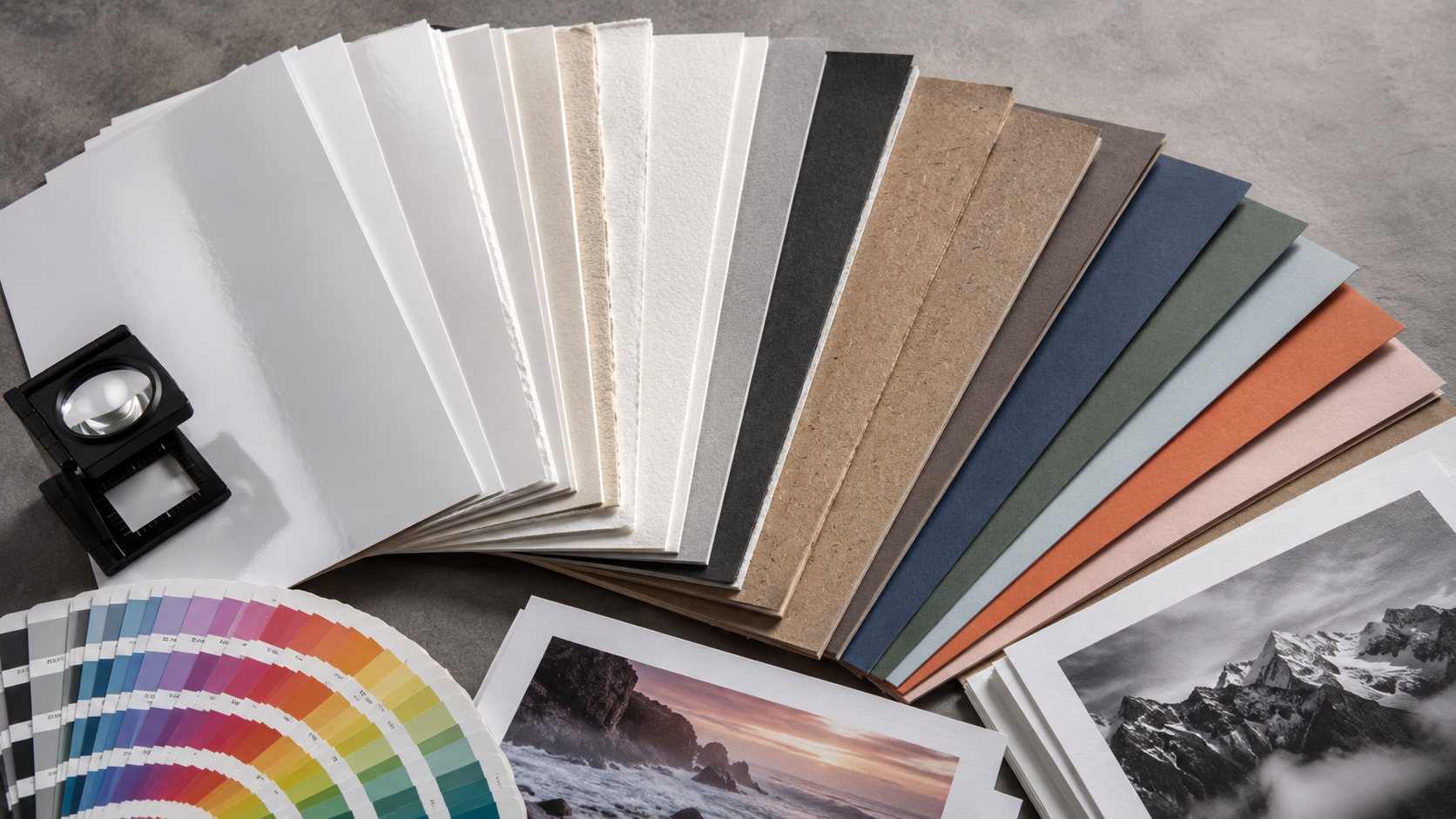
A paper’s finish is the difference between vivid, photo-rich marketing pieces and clean, easy-to-read documents. Finish refers to whether the paper has a coating and how that surface reflects light. It is the choice most people notice immediately, even if they cannot name it.
Coated vs. Uncoated
Coated paper has a thin surface layer that keeps ink sitting on top of the sheet, producing sharper images and richer color. Uncoated paper has no such layer, so ink soaks in slightly for a softer, more natural look — and it is the only option you can comfortably write on with a pen. The main finishes break down like this:
- Gloss: Shiny and reflective, making colors and photos pop. Ideal for marketing brochures, postcards, and photo-heavy pieces.
- Matte (or dull): No shine and minimal glare, giving an elegant, sophisticated feel that is easy to read. Great for text-heavy pieces and upscale branding.
- Satin or silk: A middle ground between gloss and matte — some richness without harsh glare. A safe, versatile choice for most marketing collateral.
- Uncoated: Natural, tactile, and writable. The standard for letterhead, forms, business cards meant to be written on, and books.
Brightness and Opacity Affect Readability and Show-Through
Two less obvious properties — brightness and opacity — quietly determine how professional your final piece looks. Brightness measures how much light the paper reflects on a scale from 1 to 100; a higher number means a whiter sheet with more contrast, which makes colors and black text appear crisper. Opacity measures how much the printing on one side shows through to the other.
These matter most in specific situations:
- Double-sided printing: Choose a higher-opacity stock so text and images do not bleed through and distract the reader.
- Photo and color work: A brighter sheet (90+ brightness) gives photographs more pop and contrast.
- Texture: Smooth stocks suit fine detail and photos, while textured options like linen or felt add a tactile, premium feel to invitations and stationery.
- Sustainability: Recycled and FSC-certified stocks let you meet environmental goals, and many now match the quality of standard papers.
Which Paper Stock Is Right for Your Project?
The best paper stock is the one that matches what your piece is meant to do. Rather than starting with weights and finishes, start with the project itself and work backward. Here is a practical starting point for the most common commercial print jobs:
| Project | Recommended Stock | Why |
|---|---|---|
| Business cards | 110–130 lb cover, matte or gloss | Rigid enough to resist bending and feel professional |
| Flyers | 80–100 lb text, gloss or satin | Affordable, vivid, and easy to hand out in volume |
| Brochures | 100 lb text or light cover | Folds cleanly while still feeling substantial |
| Postcards / mailers | 100 lb cover or heavier | Durable enough to survive the postal system |
| Booklets & manuals | Text-weight interior, cover-weight outside | Lightweight pages with a protective, durable cover |
| Letterhead & forms | Uncoated bond or text | Writable surface and a clean, professional look |
If your project does not fit neatly into one of these, or you want to balance quality against budget, that is exactly when a quick conversation with your printer pays off.
Frequently Asked Questions About Paper Stock
What is the most common paper weight for flyers?
Flyers are most often printed on 80 lb to 100 lb text stock. This weight is sturdy enough to feel professional without driving up cost on large quantities. A gloss or satin finish is popular for flyers because it makes colors and images stand out.
Should I choose gloss or matte paper?
Choose gloss when you want vivid colors and sharp photos, such as for marketing brochures and postcards. Choose matte when readability and an elegant, glare-free look matter more, such as for text-heavy pieces or upscale branding. Satin sits between the two and is a reliable all-purpose option.
What weight should a business card be?
Business cards are typically printed on 110 lb to 130 lb cover stock so they feel substantial and resist bending. Heavier specialty stocks are available for a premium impression. If you want recipients to write notes on the card, an uncoated finish is the better choice.
What is the difference between coated and uncoated paper?
Coated paper has a surface layer that keeps ink on top of the sheet, producing sharper images and brighter color. Uncoated paper has no coating, so it absorbs ink for a softer look and can be written on with a pen. Coated suits marketing and photo pieces, while uncoated suits letterhead, forms, and documents.
Can I get recycled or eco-friendly paper stock?
Yes. Recycled and FSC-certified stocks are widely available and now match the print quality of standard papers for most projects. They are a strong option for businesses with sustainability goals. Ask your printer which eco-friendly stocks suit your specific piece.
The Right Paper Stock Starts With a Free Proof
Choosing paper stock is far easier when you can see and feel your options before committing to a full run. Weight gives your piece its substance, finish shapes how it looks, and purpose guides every decision in between — but nothing replaces holding the actual paper in your hands. That is why seeing a sample matters as much as reading any guide.
If you are planning a print project in San Diego or Poway, the team at Replica Printing Services is happy to recommend the right stock for your goals and budget — and provide a free printed proof so you know exactly what you are getting before you order. The right paper turns a good design into a piece people are proud to hand out.